 Pin
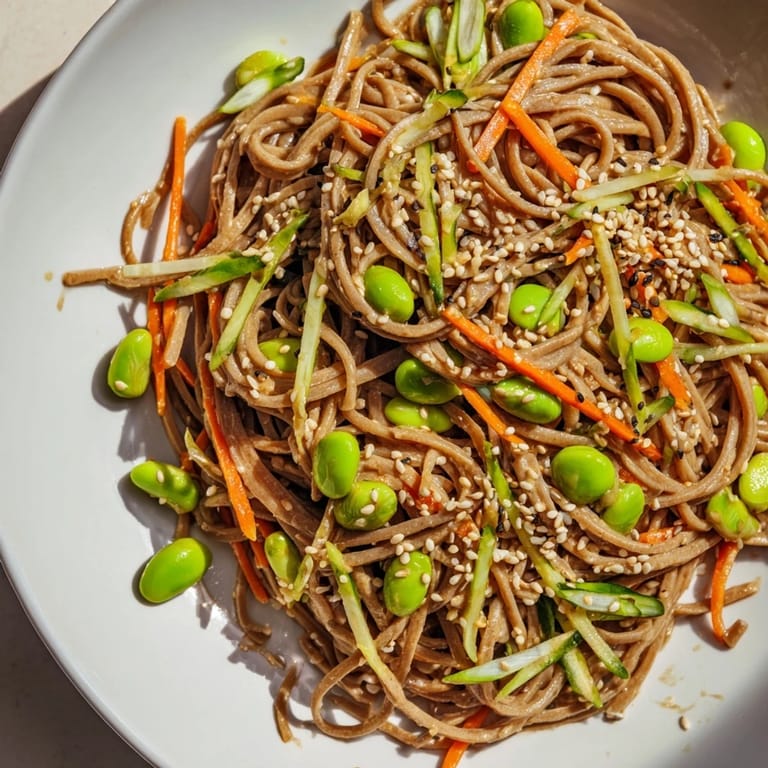
Pin One sticky summer afternoon, I was rummaging through my pantry looking for something cold to eat, and my hand landed on a jar of tahini I'd forgotten about. I mixed it with soy sauce and sesame oil almost on impulse, tossed it with some leftover noodles and whatever vegetables I could find, and suddenly I had this silky, nutty bowl of noodles that tasted like a restaurant dish. Now I make it constantly—it's become my go-to when the kitchen feels too hot for cooking anything serious.
I served this to my friend Maya on a day when she arrived at my apartment completely stressed about work, and watching her face light up at the first bite made me realize how food can quietly reset someone's whole mood. She asked for the recipe before she'd even finished the bowl, and now whenever I see her, she tells me she makes it at least twice a month.
Ingredients
- Soba or thin spaghetti noodles (250 g): Soba has this delicate, slightly nutty flavor that pairs beautifully with sesame, but regular spaghetti works just as well and doesn't cost extra.
- Cucumber (1 medium, julienned): The crispness matters here—if you have time, salt the cucumber strips lightly and let them sit for a few minutes, then pat dry to keep them crunchy instead of weeping into the dressing.
- Carrots (2 medium, julienned): Raw carrots add sweetness and snap; I like to julienne them thin enough that they feel delicate against the noodles.
- Edamame (1 cup, cooked and cooled): Buy them frozen and boil quickly, or use canned—this is where you get real protein without fussing.
- Spring onions (2, thinly sliced): They add a sharp, fresh bite that cuts through all the richness of the sesame.
- Tahini or toasted sesame paste (3 tbsp): This is the backbone of the whole dish; don't skip it or use sunflower seed butter as a substitute—tahini's earthiness is irreplaceable.
- Soy sauce (2 tbsp): Use tamari if you're avoiding gluten, and don't oversalt the dressing at first—you can always add more once you taste it.
- Rice vinegar (1 tbsp): It's gentler and sweeter than regular vinegar, which keeps the dressing from becoming harsh.
- Toasted sesame oil (1 tbsp): A little goes a long way; dark sesame oil is what you want, not the pale untoasted kind.
- Honey or maple syrup (1 tbsp): Just a touch of sweetness balances the salt and vinegar—maple syrup works beautifully if you want a vegan version.
- Fresh ginger (1 tsp, grated): Freshly grated ginger tastes completely different from the jarred kind, and it wakes up the whole dressing.
- Garlic (1 clove, minced): One clove is usually enough; garlic can dominate if you're heavy-handed.
- Toasted sesame seeds (2 tbsp): These add crunch and visual depth—toast them yourself if you have time, as they taste fresher than pre-toasted.
Tired of Takeout? 🥡
Get 10 meals you can make faster than delivery arrives. Seriously.
One email. No spam. Unsubscribe anytime.
Instructions
- Cook and cool the noodles:
- Boil them exactly according to the package—a minute too long and they'll turn mushy in the dressing. Rinse them under cold water until they're completely cool, or toss them with a tiny bit of sesame oil to keep them from sticking while they cool.
- Build the dressing:
- Whisk tahini, soy sauce, rice vinegar, sesame oil, honey, ginger, and garlic together in a bowl. The mixture will look thick and almost broken at first, but as you add water a tablespoon at a time, it'll transform into something silky and pourable—this is the magic moment.
- Bring it all together:
- Toss the cold noodles with the dressing while they're still cool, then add the cucumber, carrots, and edamame. Use a gentle hand—you're trying to coat everything evenly, not mash the vegetables.
- Finish and chill:
- Scatter spring onions and sesame seeds on top, add any optional garnishes you like, then let the whole thing chill for at least 10 minutes. This gives the flavors time to settle and the noodles time to absorb the dressing properly.
 Pin
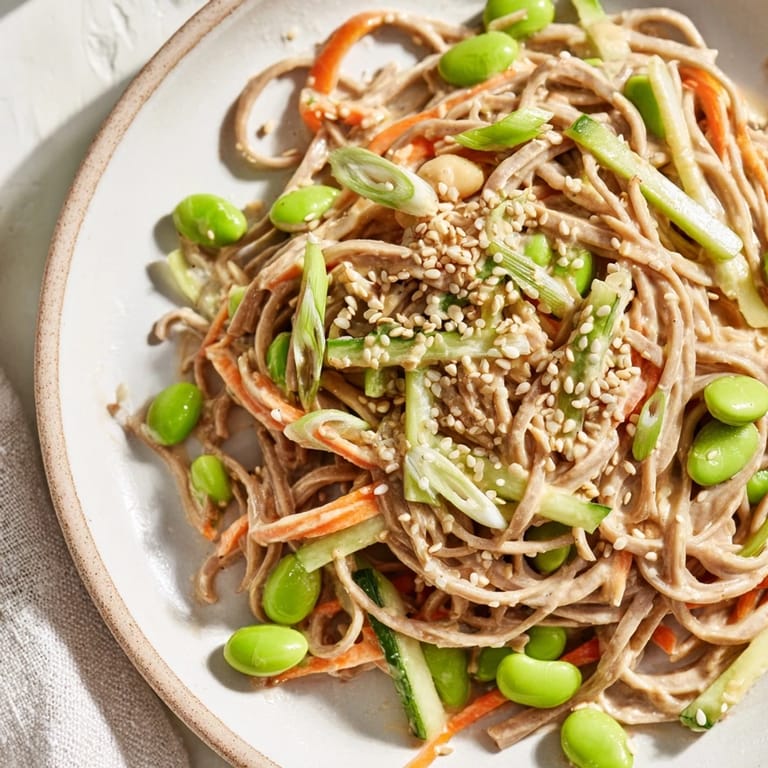
Pin There's a moment right after you finish tossing this salad when the kitchen smells like toasted sesame and fresh ginger, and you know you've made something people are actually going to want to eat. That's when I realized this dish had become less about following a recipe and more about understanding how flavors balance and talk to each other.
Why This Works as a Meal
This salad sits at this perfect intersection of being light enough for a hot day but substantial enough that you don't feel hungry an hour later. The noodles provide carbs and heartiness, the edamame brings real protein without meat, and the vegetables add crunch and vitamins—it's actually a complete meal, not just a side dish pretending to be one. Every element earns its place.
Making It Your Own
The template here is flexible in ways that matter. If you have shredded cooked chicken or crumbled tofu on hand, throw it in. If you can't find edamame, use chickpeas or white beans—anything that adds protein and texture. I've made this with mint instead of cilantro, with lime juice instead of rice vinegar when I was running low, and even with crushed peanuts instead of sesame seeds. The dressing is the anchor that ties everything together, so as long as you keep that constant, you're free to improvise with the vegetables and garnishes.
Storage and Make-Ahead Tips
This dish actually improves after a day in the fridge, as the noodles continue to absorb the flavors and soften slightly. Store it in a covered container and give it a gentle toss before eating. If the dressing looks absorbed or thick the next day, stir in a splash of water and a tiny bit more sesame oil to revive it. It keeps well for 3 to 4 days, making it ideal for meal prep when you know the week ahead is going to be chaotic.
- Make the dressing and chop vegetables the night before, then assemble everything in the morning for a truly hands-off lunch.
- If you're cooking for a crowd, double the dressing and keep the components separate until serving so everyone can adjust to their own taste.
- Toast your own sesame seeds in a dry pan for 2 to 3 minutes if you have time—the difference in flavor is noticeable and worth it.
 Pin
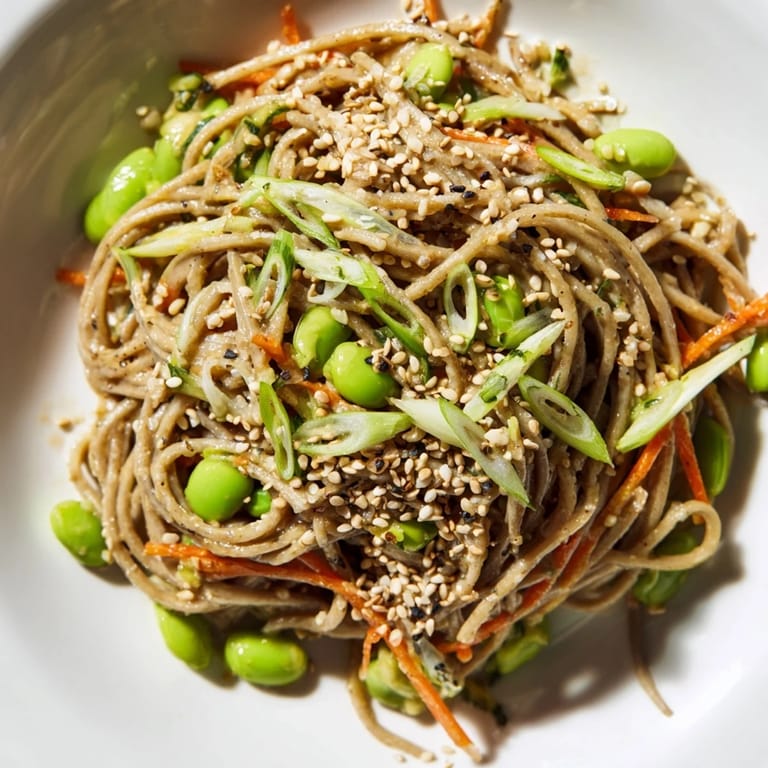
Pin There's something satisfying about a dish that tastes like it took hours but was really just 30 minutes of casual chopping and whisking. This salad reminds me that good food doesn't need to be complicated to be memorable.
Recipe Q&A
- → What type of noodles can I use?
Soba noodles or thin spaghetti work well; for gluten-free options, rice noodles are a great substitute.
- → How do I make the dressing creamy?
Whisk tahini with soy sauce, rice vinegar, sesame oil, honey, ginger, garlic, and water until smooth and pourable.
- → Can I add protein to this dish?
Yes, shredded cooked chicken or tofu are excellent additions for extra protein.
- → How should the noodles be prepared before mixing?
Cook according to package instructions, then rinse with cold water and drain to cool completely.
- → What garnishes complement this dish?
Fresh cilantro or mint leaves, crushed peanuts or cashews, and lime wedges add extra flavor and texture.