 Pin
Pin There's this moment when you're standing over a skillet, watching onions transform from sharp and papery to glossy amber strands, and you realize you're not just cooking—you're performing alchemy. That's when I first understood why the French take caramelized onions so seriously. Years later, a friend ordered a grilled cheese at a fancy bistro and came back raving about the depth, the richness, the way the sweetness played against nutty cheese. I thought, why wait for a restaurant when this magic happens in any home kitchen?
I made this for my partner on a random Tuesday when we both had rough days, and watching them take that first bite—the way their expression softened—reminded me that comfort food doesn't need an occasion. The golden crust gave way to melted cheese and those sweet, jammy onions, and suddenly our kitchen felt like the best place in the world to be.
Ingredients
- Medium yellow onions, thinly sliced (2): The foundation—yellow onions have more natural sugar than others, which caramelizes into deep sweetness. Slice them thick enough that they hold their shape but thin enough to cook evenly.
- Unsalted butter (2 tbsp for onions, plus 2 tbsp softened for spreading): Butter is the vehicle for flavor here; it carries the onion sweetness and eventually browns into something aromatic. Softened butter spreads without tearing your bread.
- Kosher salt and freshly ground black pepper (1/2 tsp each): These season the onions as they cook, coaxing out their natural moisture and preventing them from tasting flat.
- Sugar (1/2 tsp, optional): A small nudge toward caramelization if your onions seem reluctant or if you want extra honeyed richness.
- Balsamic vinegar (1 tsp, optional): A splash at the end adds complexity and a slight tang that balances the sweetness, though it's truly optional.
- Rustic sourdough or country bread (4 slices): You need bread sturdy enough to hold melted cheese and onions without getting soggy—thin sandwich bread will fall apart.
- Gruyère cheese, grated (150g): Gruyère melts smoothly and brings a nutty, slightly earthy flavor that regular cheddar can't match. Grating it yourself ensures it melts faster and more evenly.
Tired of Takeout? 🥡
Get 10 meals you can make faster than delivery arrives. Seriously.
One email. No spam. Unsubscribe anytime.
Instructions
- Start the onions slow and low:
- Melt butter in a large skillet over medium-low heat, then add your onion slices with a pinch of salt and pepper. You're not trying to cook them quickly—you're coaxing out their sweetness, and that takes time. Stir every few minutes so they brown evenly without catching on the pan.
- Let them become golden amber:
- Over 25 to 30 minutes, the onions will go from translucent to pale golden to deep caramel. You'll see their edges darken and curl slightly, and the whole pan will smell almost sweet. If they're catching or browning too fast, lower the heat—patience wins this round.
- Taste and adjust:
- When they're deep and glossy, add the sugar and balsamic vinegar if you're using them, and cook for 2 to 3 more minutes. Taste a strand; it should taste like sweet onion jam, not raw onion.
- Build your sandwich strategically:
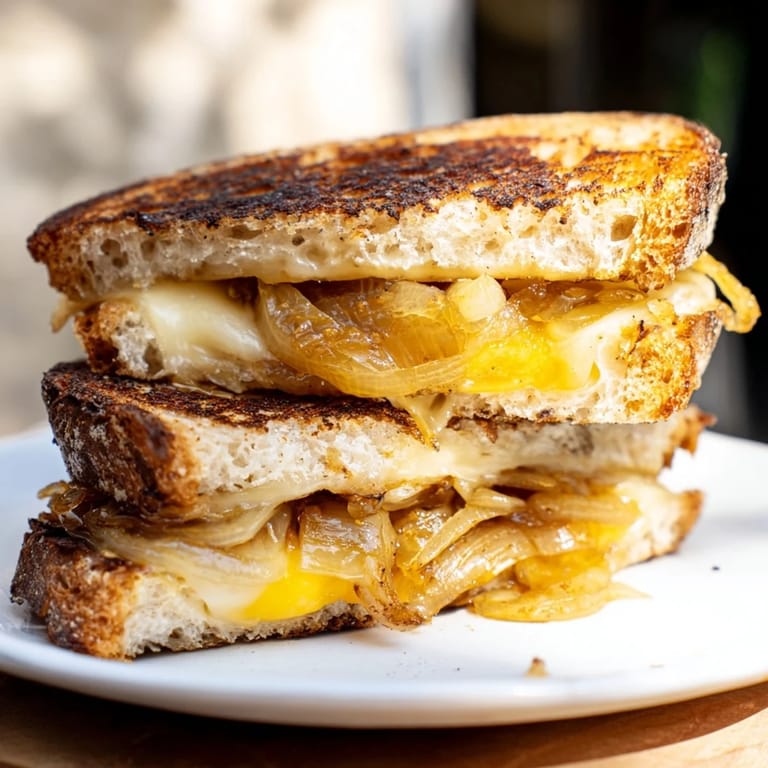
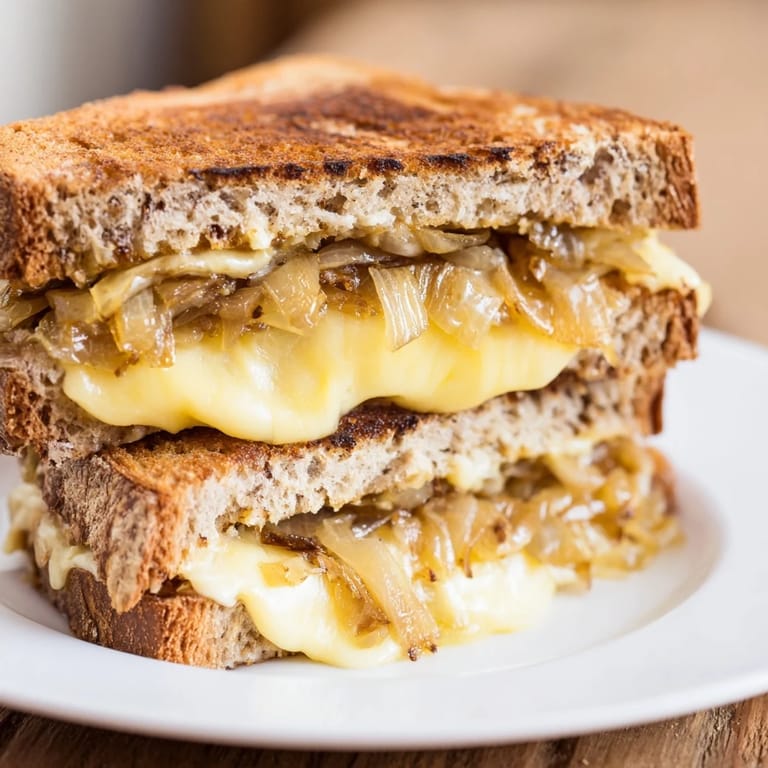
- Spread softened butter on one side of all four bread slices. Lay two slices butter-side down, then sprinkle half your grated Gruyère onto each. Spoon the caramelized onions over the cheese, divide the remaining Gruyère between them, and cap with the other slices, butter-side up.
- Grill until golden and melted:
- Heat a nonstick skillet or griddle to medium and place your sandwiches down gently. Press them with a spatula occasionally as they cook, 3 to 4 minutes per side. You want deep golden-brown bread and cheese that's completely melted and soft.
- Serve while the cheese is still flowing:
- Slice in half and eat immediately while everything is warm and the cheese is still at its most luxurious.
 Pin
Pin There was a Sunday morning when I made this for a friend visiting from out of town, and halfway through eating, they put their sandwich down and just smiled. That's the moment I knew this recipe had become something more than lunch—it was proof that you can take something beloved and make it feel both familiar and surprising at once.
The Art of Caramelization
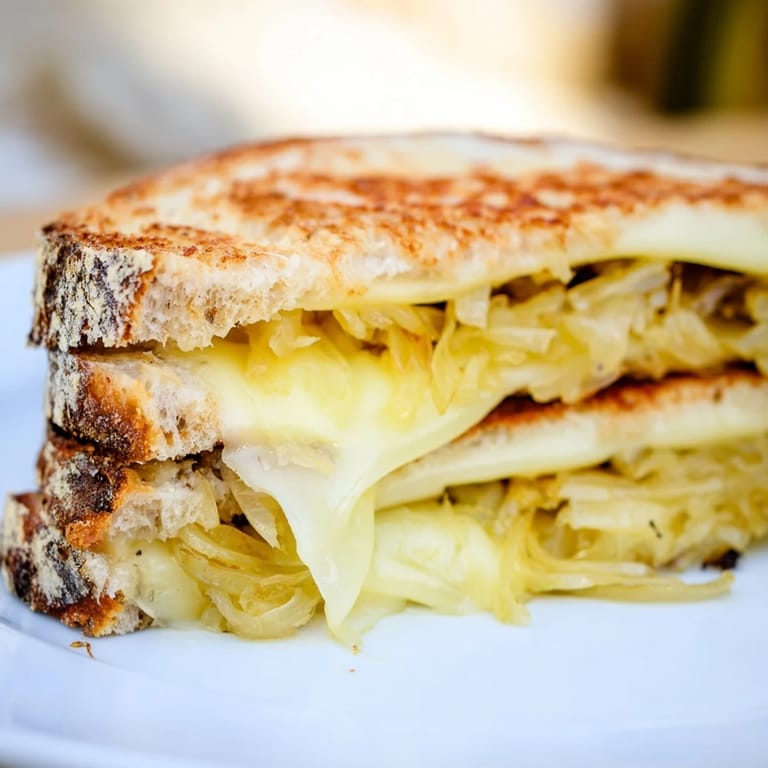
Caramelizing onions isn't about heat or speed; it's about letting their sugars slowly brown and concentrate, turning them from sharp to almost fruity. The Maillard reaction—that browning that happens when proteins and sugars meet heat—is what transforms pale slices into something that tastes vaguely sweet, almost jam-like. This isn't a shortcut step; it's the soul of the recipe.
Cheese Selection and Melting
Gruyère is chosen for its melting point and flavor profile, but if you can't find it, Emmental and Swiss cheese are forgiving substitutes that will still give you that nutty, sophisticated taste. Pre-grated cheese melts faster than chunks because it has more surface area exposed to heat. The key is spreading the cheese out evenly across the bread so every bite has that creamy, melted texture.
Making It Your Own
This sandwich is a canvas once you understand the basics, and some of my favorite variations have come from improvisation and leftover ingredients. Fresh thyme scattered into the onions while they cook adds an herbaceous note that feels refined without trying. A thin layer of good mustard or a spread of fig jam bridges the savory and sweet even further if you want drama on the plate.
- Try a small handful of fresh thyme leaves stirred into the onions during the last few minutes of cooking for herbal complexity.
- A thin smear of Dijon mustard on the bread before assembly adds a sharp edge that balances the sweetness beautifully.
- For a heartier version, add a single layer of thinly sliced ham between the cheese and onions, and the sandwich suddenly feels substantial enough for dinner.
 Pin
Pin This grilled cheese is proof that sometimes the best dishes are the ones that feel both elegant and completely unpretentious. Serve it with a green salad or a bowl of tomato soup, pour a glass of something crisp, and let the meal remind you why cooking for yourself or someone you care about matters.
Recipe Q&A
- → How do you caramelize onions properly?
Cook thinly sliced onions slowly over medium-low heat with butter, salt, and pepper, stirring occasionally for about 25–30 minutes until deep golden and sweet.
- → Can I use other cheeses instead of Gruyère?
Yes, cheeses like Emmental or Swiss offer similar nutty flavors and melt well for this dish.
- → What bread types work best for this sandwich?
Rustic sourdough or country bread with a sturdy crust and tender crumb best hold the filling and crisp up nicely when grilled.
- → Why add balsamic vinegar to the onions?
A splash of balsamic vinegar adds subtle acidity and depth, balancing the sweetness of the caramelized onions.
- → How can I prevent the bread from browning too fast?
Cook over medium heat and adjust the temperature down if the bread looks like it’s browning before the cheese melts to ensure even cooking.
- → Are there ways to enhance the flavor profile?
Adding fresh thyme to the onions or including thinly sliced ham adds herbal or savory layers of flavor.